TEA OF HEAVEN
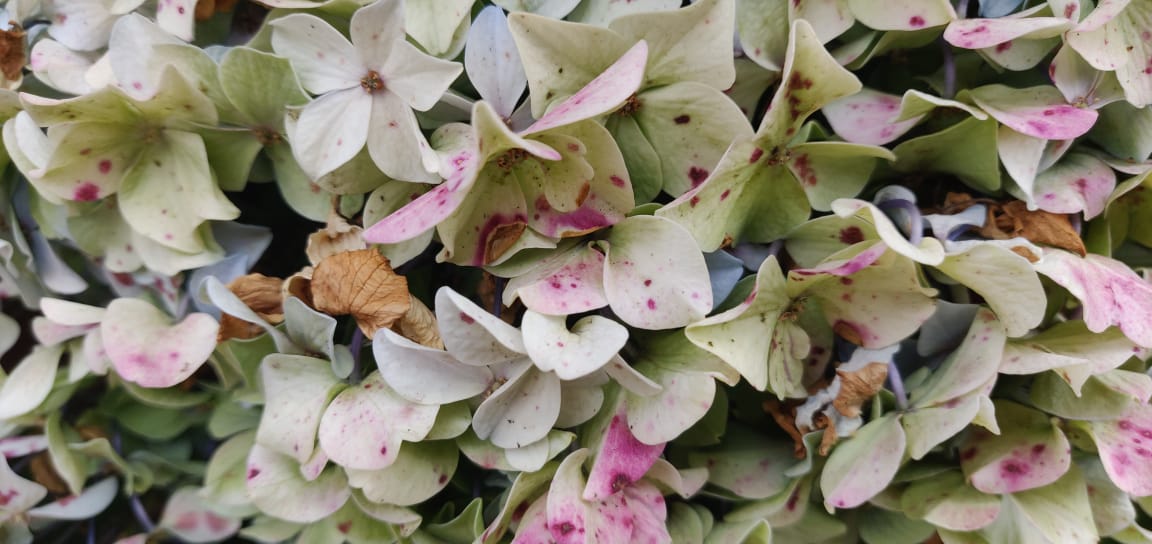
I am sure a lot of you who have been to the hills have seen these beautiful flowers, which come in shades ranging from white to blue to pink to even green. But did you know that there is a herbal tea made from the leaves of these plants?
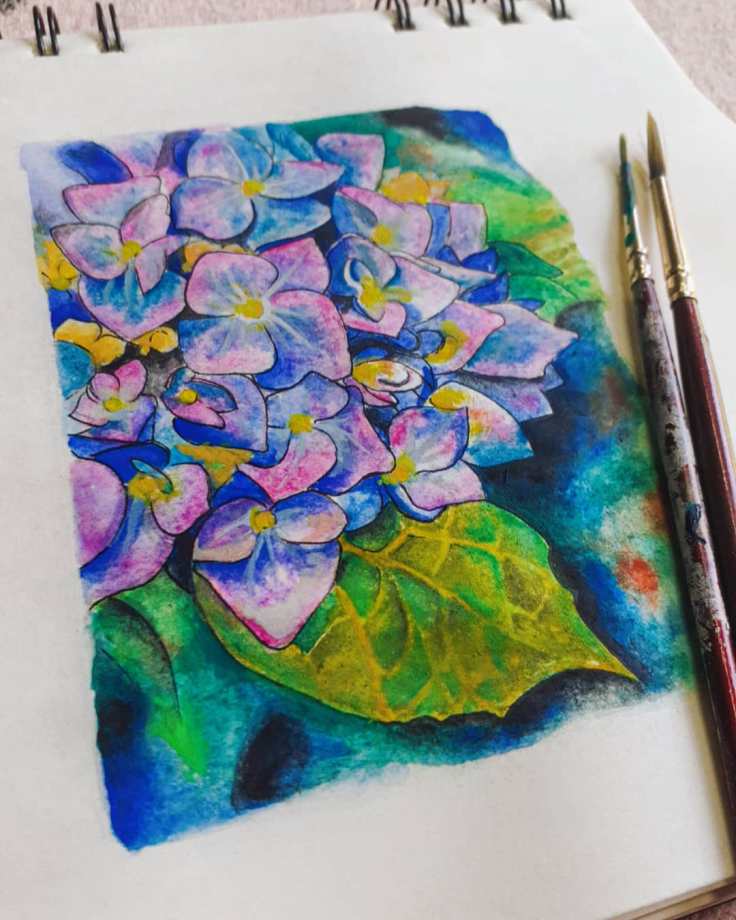
I found out about this in a very interesting way. It all started when I decided to do a painting of these beautiful flowers (fig 2). After drawing, when I was showing them to my mother we got into this really interesting conversation.
My mother who loves gardening told me that her colleague once told her not to plant these at home as they are considered to bring bad luck and that they are usually used in funerals. I had seen people placing these flowers on graves too.
That was when curiosity got the best of me and I started reading on this flower. Like the quote….
Everything has two sides, Like a coin you will only see the other side once you flip over this side.
PRIYAANK ARORA
…..it was then that I came across a whole new way of looking at these flowers. Where in one part of the world it is considered to bring bad luck and the other it is used to worship god.
So what is amacha?
Amacha 甘茶 is a Japanese herbal tea from the plant called hydrangea macrophylla. Amacha translates to “sweet tea”, where the characters 甘い stands for sweet and 茶 for tea in Japanese. If you have tasted this refreshing drink you will understand why it is named so.
So what makes it so sweet?
The leaves have a natural sweetener called phyllodulcin. This makes these leaves 400-800 times sweeter than sugar! Yes, you read that right! Imagine someone dumping a few extra spoons of sugar in your cup, that’s how sweet it is compared to our normal table sugar (sucrose).
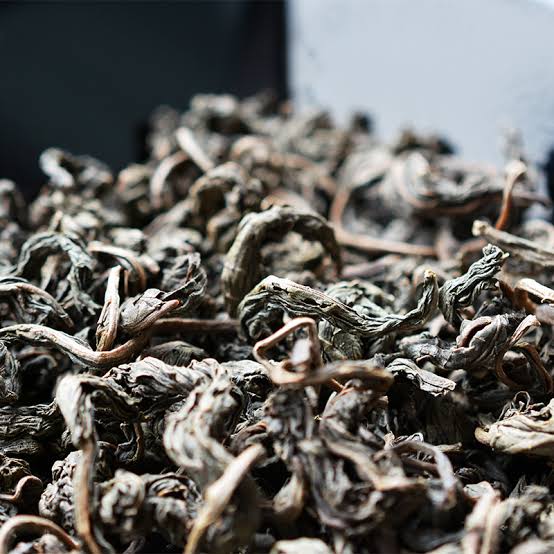
The leaves are harvested just before flowering. At this stage they have a bitter taste. They are then withered, hand rolled, fermented and dried. After the fermentation process, the bitterness changes into our sweet friend phyllodulcin.
Young leaves and fermented leaves
The young leaves are grown at a higher elevation and harvested when they are young. When hand-picked at this age, they act as a whole body adaptogen and are a perfect daily tonic tea.
The fermented version comes from lower elevation plants that are more mature and are closer to a natural water source. The leaves are picked much older and fermented for 3 years, drawing the glyconutrients to the surface. The process creates a much sweeter tea.
The fermented Amacha can be used as a stand alone tea or ground up and used as a sweetener in smoothies with no negative effects on blood sugar. It is diabetic safe.
Buddha’s tea
In Japan this tea is served during the birthday celebrations of Buddha, on the 8th of April. This day is known as the Hanamatsuri 花祭り (Flower Festival). Hence came to be also known as Buddha’s tea. During the celebrations the tea is poured over Buddha as if to bathe a newborn baby. You may also hear people referring to amacha as Buddha’s tears because it was assumed that even Lord Buddha’s tears were sweet and not salty like ours!
Another theory also says that the day Buddha was born the morning dew tasted sweet.
The new health drink
This tea has no calories and as an added bonus a natural sweet flavor making it a delicious healthy drink. It also has no caffeine as it does not come from the Camellia Sinensis (tea plant). It comes from the tisane (herbal teas) which is basically any plant derived drink other than tea. As mentioned before it is also diabetic safe.
The tea has many health benefits. Some of these include:
- Protection of the body from infections.
- Facilitation of proper nerve functioning.
- Aiding in process of healing wounds and also in skin regeneration.
- Detoxification and protection of the liver.
Brewing process
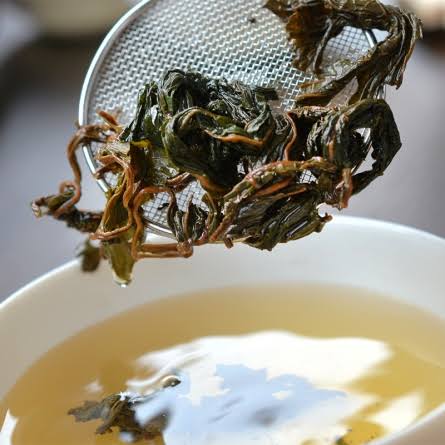
The main point to remember while steeping amacha leaves is that the longer you steep them the sweeter it gets. So if you are not a sweet tooth then less than a min should be more than enough for you.
You can also steep the same leaves at various stages to get milder versions and choose the one you like.
- The first steep for 30 seconds
- The second for 45 seconds
- The third for about a minute respectively.
If you have tasted Amacha before would love to hear about your experience.
Please do feel free to share your thoughts and comments regarding this blog below.
 A Long たまご....
I have many hydrangea plants and it’s one of my favourite flowers. I never knew it’s benefits in food. Thanks for sharing.
LikeLiked by 1 person
Thank you for reading and glad it made you understand these plants better.
LikeLike